
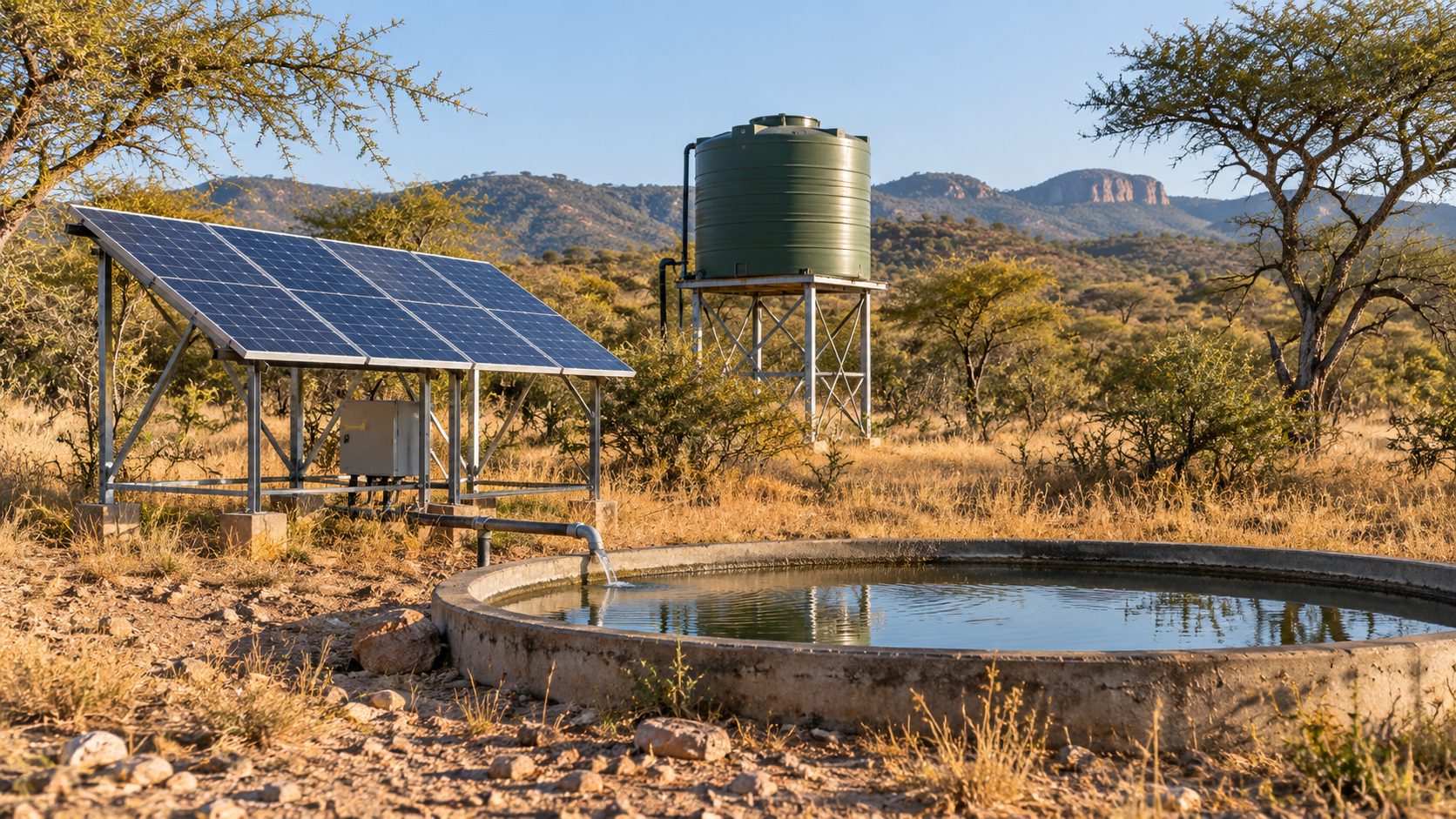

Artificial Water Points and Their Ecological Impact: Finding the Right Balance
Water is one of the most influential resources in any ecosystem. It determines where animals feed, rest, breed, and travel throughout the year. As wildlife management has evolved, many game ranches and conservation areas have introduced artificial water points to supplement natural water sources. While these systems provide valuable support, they also influence ecosystems in ways that require careful planning and ongoing management.
Artificial water points have become an essential conservation tool, particularly in regions where rainfall is seasonal or droughts are common. However, successful wildlife management is about more than simply providing water—it requires understanding how additional water affects wildlife behaviour, vegetation, biodiversity, and the long-term health of the landscape.
When properly planned and maintained, artificial water points strengthen conservation efforts. When poorly managed, they can unintentionally create environmental challenges.
Why Artificial Water Points Are Important
Natural rivers, wetlands, and seasonal pans do not always provide enough water throughout the year. Extended dry seasons and increasingly unpredictable rainfall place significant pressure on wildlife and natural ecosystems.
Artificial water points help to:
- Provide reliable drinking water during drought.
- Support healthy wildlife populations.
- Reduce pressure on individual natural water sources.
- Improve the distribution of animals across larger properties.
- Strengthen resilience during periods of low rainfall.
- Support newly established wildlife populations.
Common infrastructure includes boreholes, reservoirs, storage tanks, troughs, gravity-fed systems, and solar-powered pumps. When integrated into a broader management strategy, these systems become valuable long-term conservation assets.
Understanding Natural Wildlife Movement
Wildlife has evolved to respond to seasonal water availability. As natural water sources dry up, many species migrate to areas where water remains available. These seasonal movements help prevent overgrazing and allow vegetation time to recover.
Permanent artificial water points can alter these natural patterns. Animals may remain in one area for longer periods, increasing grazing pressure and changing how wildlife is distributed across the landscape.
This is not necessarily harmful, but it does require careful monitoring to ensure habitat quality is maintained and ecological balance is preserved.
Water Influences Vegetation
Where water is available, wildlife naturally gathers. Increased browsing, grazing, and trampling around permanent water points can gradually affect surrounding vegetation.
Potential impacts include:
- Reduced vegetation cover.
- Soil compaction.
- Increased erosion.
- Loss of sensitive plant species.
- Slower vegetation recovery.
Because these changes occur gradually, regular monitoring is essential. Comparing vegetation near water points with less frequently used areas helps identify problems before significant habitat degradation occurs.
Managing Grazing Pressure
One of the advantages of artificial water infrastructure is the ability to influence wildlife distribution.
Strategically positioning multiple water points encourages animals to spread more evenly across the property, reducing concentrated grazing and allowing vegetation to recover.
In some situations, temporarily closing selected water points can encourage more natural movement patterns while allowing overused habitats to regenerate.
Water distribution should always support the property’s carrying capacity and long-term conservation objectives.
Predator and Prey Relationships
Waterholes naturally attract wildlife, making them ideal hunting locations for predators.
Permanent artificial water points may increase the predictability of prey movements, creating more consistent hunting opportunities. While predation is a natural part of healthy ecosystems, managers should understand how infrastructure placement influences these interactions.
Thoughtful positioning of water points helps maintain natural ecological processes while reducing unnecessary pressure on vulnerable species.
Supporting Biodiversity
Artificial water points benefit far more than large mammals.
They provide important habitat for:
- Birds
- Amphibians
- Reptiles
- Pollinating insects
- Aquatic invertebrates
- Small mammals
By creating diverse habitats around water sources, wildlife managers strengthen ecosystem resilience and encourage healthy ecological relationships throughout the property.
Infrastructure Should Support Conservation
Installing water infrastructure is a significant investment, and every new water point should have a clear conservation purpose.
Before construction, consider:
- What conservation objective will it achieve?
- Will it reduce pressure on existing water sources?
- How will it influence wildlife movement?
- Can surrounding habitats support increased animal activity?
- Is there capacity for ongoing maintenance?
Infrastructure should always support ecological goals rather than simply improving convenience.
Long-Term Maintenance Matters
Even the best-designed systems require regular inspection and maintenance.
Routine management should include:
- Inspecting pumps and motors.
- Checking pipelines for leaks.
- Cleaning troughs.
- Monitoring water levels.
- Clearing blockages.
- Maintaining solar-powered equipment.
- Inspecting overflow structures.
- Repairing erosion before it worsens.
Preventative maintenance extends the lifespan of infrastructure while ensuring wildlife has reliable access to water during critical periods.
Planning for a Changing Climate
Southern Africa continues to experience increasing climate variability, making dependable water infrastructure more important than ever.
Artificial water points should form part of an integrated water management strategy that includes:
- Rainwater harvesting.
- Water storage.
- Efficient distribution systems.
- Routine monitoring.
- Habitat management.
- Drought preparedness.
Planning ahead helps wildlife properties remain resilient during increasingly unpredictable environmental conditions.
Conclusion
Artificial water points have transformed modern wildlife management by providing reliable access to water during challenging conditions. However, their influence extends well beyond supplying drinking water.
They shape wildlife movement, affect vegetation, influence predator-prey relationships, and contribute to overall ecosystem health. When carefully integrated into a broader conservation strategy, artificial water infrastructure becomes an investment not only in wildlife, but in the long-term sustainability of the landscape itself.
Frequently Asked Questions
Are artificial water points always beneficial?
They provide many advantages, but only when they are properly planned, strategically located, and regularly maintained.
Can artificial water points affect vegetation?
Yes. Increased wildlife activity around permanent water sources can lead to overgrazing, soil compaction, and erosion if not carefully managed.
Should water points ever be closed?
In some situations, temporarily closing selected water points encourages more natural wildlife movement and allows overused habitats to recover.
How do artificial water points support biodiversity?
Beyond supplying drinking water, they provide habitat for birds, reptiles, amphibians, insects, and many other species that contribute to healthy ecosystem function.
Coming Next Month: Rainwater Harvesting and Water Storage: Building Resilient Wildlife Properties—discover practical ways to collect, store, and manage rainfall to improve water security and strengthen conservation throughout the year.